
Plant Health
Why Avocado Leaves Turn Yellow: What to Check First
Yellow avocado leaves can point to watering problems, nutrient availability, salt damage, or other stress. Use the leaf pattern and growing conditions to decide what to check before adding fertilizer.
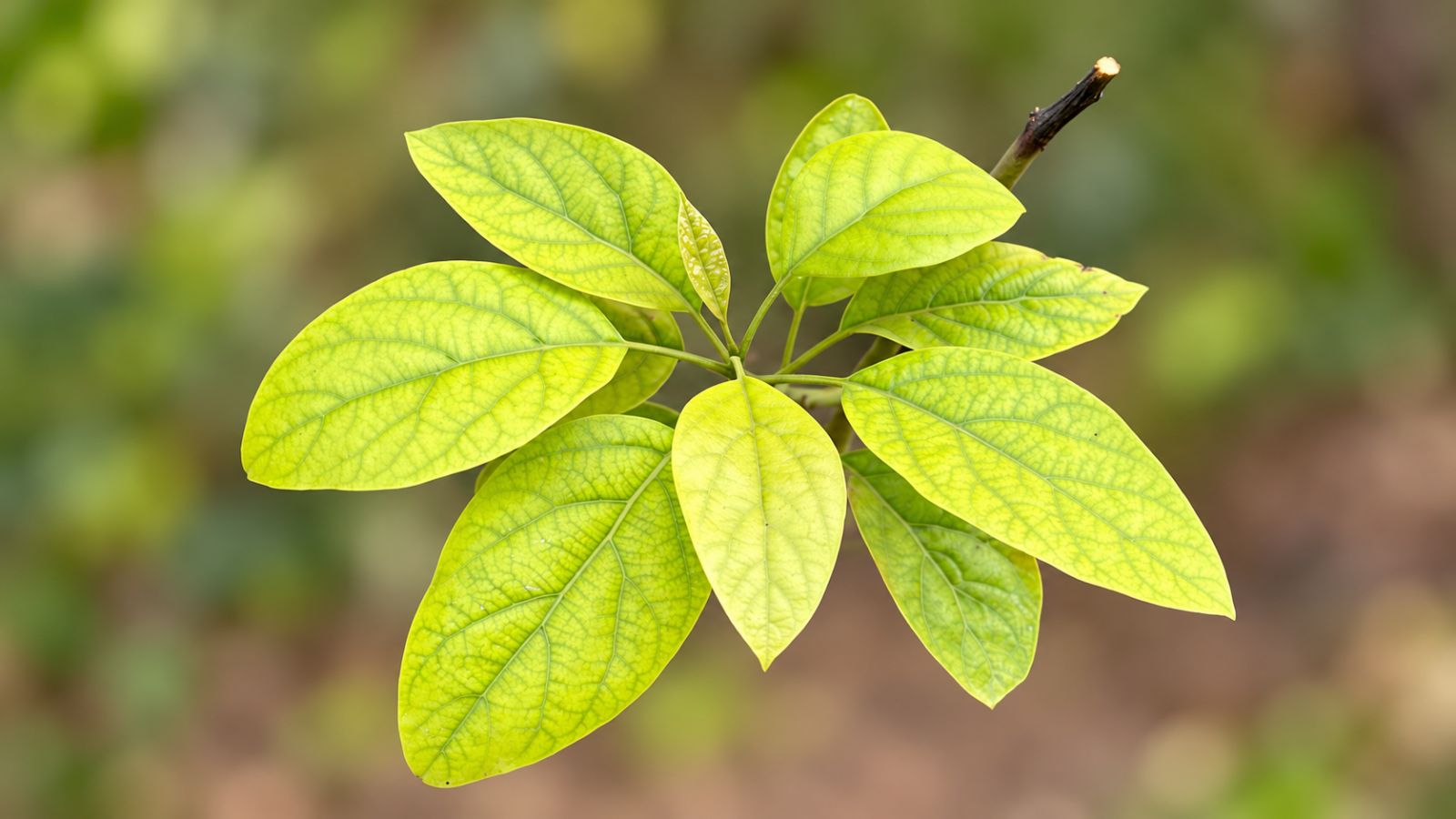
A yellow avocado leaf is a reason to investigate, not an instruction to reach for fertilizer. Watering trouble, damaged roots, nutrient availability, salts, pests, and sudden exposure changes can produce overlapping symptoms. The useful question is: which explanation fits both the leaves and the plant's recent conditions?
Start with a short inspection
Before changing care, photograph the whole plant, an affected leaf, and a healthy leaf. Include a close view of the underside. Record when the change began, whether it followed repotting or feeding, and how the potting mix feels below the surface. These observations give a nursery or extension adviser more to work with than a single cropped photograph.
Are the oldest leaves affected first, or is new growth pale?
Is the yellowing uniform, between green veins, or concentrated near brown tips?
Is the plant wilting while its mix is still wet?
Was it recently moved into stronger sunshine or exposed to unusual heat?
Read the pattern, without treating it as proof
Uniform paling of older foliage can be consistent with nitrogen shortage. Pale young leaves with greener veins can fit iron or manganese availability problems. UC IPM describes these as useful patterns, but they are not an avocado diagnosis by themselves. Compare the affected growth with the common deficiency patterns before deciding which questions to investigate.
Iron-related chlorosis can occur even when iron is present in the soil. High pH, poor drainage, and unhealthy roots can limit access to it. Adding more fertilizer does not address every cause. If the pattern persists, ask about an appropriate soil or growing-medium test and an interpretation suited to avocado. Avoid trying to change pH with household acids or guessed amendment doses. See UC IPM's explanation of iron availability.
Check water and roots before feeding
Avocado is vulnerable to Phytophthora root rot. Affected plants may have small pale leaves, a thinning canopy, or wilting despite wet soil. Poor drainage and excessive moisture favour the disease. Those signs overlap with other problems, so a photograph cannot confirm the pathogen. Check whether drainage holes are open and whether the pot is standing in retained water; seek help for persistent wet-soil wilt or progressive dieback. UC IPM's avocado root-rot guide explains the distinction between symptoms and diagnosis.
For a container plant, use our watering checklist and container-drainage guide. Do not assume that a dry-looking surface means the entire root ball is dry, or repeatedly unpot the tree just to check it. In a mulched garden bed, check beneath the leaves too; our leaf-mulch soil-health guide explains why the surface alone can mislead.
Consider salts, sun, and pests
Yellowing that develops into brown leaf margins or tips can be associated with salt injury. Fertilizers and irrigation water can both contribute salts, so review what was applied and at what rate. Brown tips alone still do not identify the cause. If salt problems are suspected, discuss water quality or medium testing before attempting heavy flushing, particularly where drainage is poor. UC IPM describes salt-related damage.
Sunburn is another possibility when exposed parts develop pale or brown patches, particularly after a change in protection or exposure. Inspect leaf undersides for insects, webbing, or spotting as well. Match an actual pest and its damage before choosing a control; do not spray simply because a leaf is yellow. See the avocado guides to sunburn and lace-bug lookalikes.
Make the next observation useful
Keep a dated record of the evidence, the care change you made, and the reason for it. Compare the extent of symptoms and the condition of subsequent growth; one old leaf is a poor measure of the whole plant. If several interventions are necessary, record each separately rather than assuming the last product caused any improvement. Our plant-record template helps separate observations from guesses.
About this guide
This is a research-based editorial guide, prepared with AI-assisted drafting and checked against the linked horticultural references. It does not report an original PlantPeepal growing trial or claim independent expert review.
Sources and further reading
- Research-based editorial guidance. AI-assisted drafting; no original growing trial or independent expert review is claimed.
- https://ipm.ucanr.edu/home-and-landscape/common-nutrient-deficiency-symptoms/
- https://ipm.ucanr.edu/home-and-landscape/iron-deficiency/
- https://ipm.ucanr.edu/agriculture/avocado/phytophthora-root-rot/
- https://ipm.ucanr.edu/home-and-landscape/nutrient-and-mineral-excesses-salinity-and-salt-toxicity/
- https://ipm.ucanr.edu/agriculture/avocado/sunburn/
- https://ipm.ucanr.edu/home-and-landscape/avocado-lace-bug/