
Container Gardening
When to Water Container Plants: A Practical Checking Routine
A reminder can tell you when to check a pot, but it cannot tell you whether the roots need water. Combine moisture checks, pot weight, weather, and plant needs to make a better watering decision.
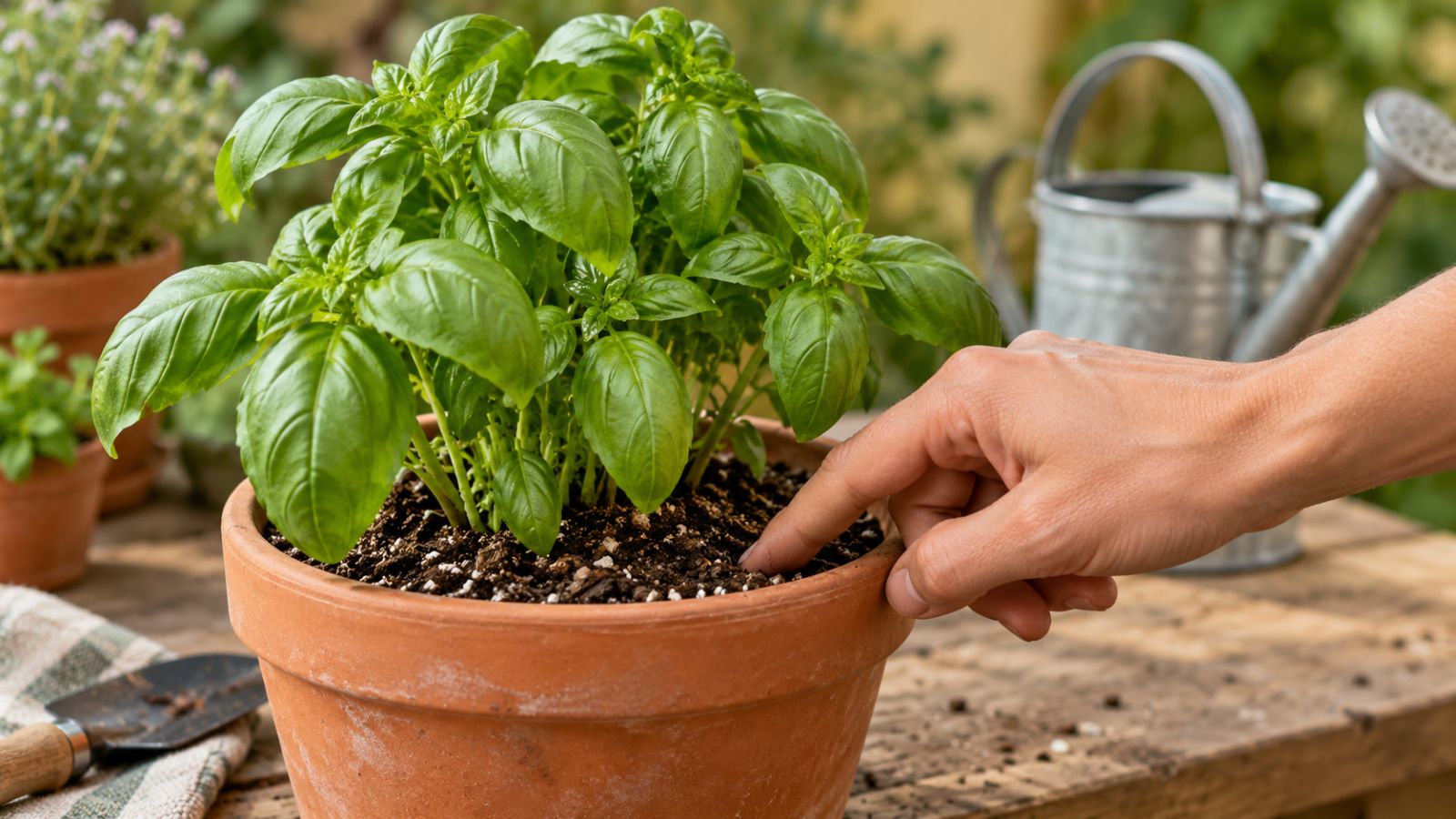
The most useful watering reminder says, 'Check this plant.' It should not automatically mean, 'Add water.' Pots dry at different rates, and a schedule that worked last week may not fit today's weather or a plant that has changed size. A short checking routine is more reliable than a rule such as watering every Sunday.
Know what the plant is meant to need
Start with its growing requirements. A container vegetable, a Mediterranean herb, and a drought-adapted succulent should not share one moisture rule. Maryland Extension explains that herbs such as thyme and lavender need a different moisture balance from many vegetables. Identify the plant before deciding how far its medium should dry; see its container-herb guidance.
Keep plants with similar needs together for convenience, but assess each pot. Similar-looking containers may hold different media or root systems. If two people care for the same collection, agree on where completed watering is recorded so a checked task is not mistaken for a task still waiting to be done.
Use three checks before reaching for the watering can
Feel below the surface. Check the medium near the root zone without damaging roots. A dry crust can hide wetter mix underneath. The appropriate depth and dryness depend on the plant, so there is no single finger-depth threshold that suits every pot. The same caution matters in beds covered with leaves, as our leaf-mulch soil-health observation illustrates.
Learn the pot's weight. For a container you can lift safely, compare how it feels after watering and drainage with how it feels when approaching its next watering. Treat weight as a second clue, not a reason to lift a large tree pot.
Look at the plant and the conditions. Compare its current appearance with its normal one and consider heat, wind, shade, recent rain, and whether it is actively growing.
These checks build on Maryland Extension's advice to feel the medium and learn container weight. For many actively growing outdoor containers, daily checking is sensible while learning their pattern. Daily checking is not the same as daily watering.
Why one pot dries sooner than another
Water demand changes with plant size, container volume, exposure, and temperature. A large plant in a small volume of mix may use available moisture quickly. Maryland Extension's vegetable-container guide describes these factors. Watch what happens in your own location rather than adopting another gardener's interval unchanged. For a deciduous container tree, revisit summer habits as the season changes; our autumn fig leaf-fall guide explains the checks to make.
Material also matters. Porous terra cotta can lose moisture faster than less porous containers. Maryland's potting guide discusses those differences. A decorative outer pot can hide retained water, so inspect the whole setup rather than only the inner pot's surface.
When watering is needed, reach the root ball
For ordinary free-draining pots, apply water gently to the medium at the plant's base, allowing it to wet the root ball and leave through drainage holes. Stop to assess absorption if water runs straight past dry mix. A quick splash that darkens the top may not have wetted the container evenly. Do not keep adding water to a pot that cannot drain.
Avoid leaving ordinary plant pots soaking in collected runoff. University of Minnesota Extension advises emptying water-catching trays and maintaining moisture without prolonged saturation in its container-watering guide. Purpose-designed self-watering systems are different: follow their reservoir and overflow instructions, and choose plants suited to that system.
Use reminders as a feedback loop
Try an inspection log with four fields: date, moisture observation, action, and next check. An illustrative entry is: 'Tuesday morning: mix still moist below the surface; no water added; check again tomorrow.' That is a completed care decision even though no watering happened.
If checks repeatedly find the pot wetter or drier than expected, adjust the reminder interval. Keep exceptional conditions in the record so a hot week's routine does not become a permanent rule. If a plant wilts while the mix is wet, investigate roots, drainage, or other stress instead of reflexively watering again.
Use our drainage checklist for persistently wet containers and the plant-record template for a routine you can maintain.
About this guide
This is a research-based editorial guide, prepared with AI-assisted drafting and checked against the linked horticultural references. It does not report an original PlantPeepal growing trial or claim independent expert review.
Sources and further reading
- Research-based editorial guidance. AI-assisted drafting; no original growing trial or independent expert review is claimed.
- https://extension.umd.edu/resource/growing-vegetables-containers-and-salad-tables
- https://www.extension.umd.edu/resource/maintaining-container-grown-vegetables
- https://extension.umn.edu/garden-and-home/yard-and-garden/gardening-in-minnesota/fertilizing-and-watering-container-plants
- https://extension.umd.edu/resource/potting-and-repotting-indoor-plants
- https://www.extension.umd.edu/resource/growing-herbs-containers-and-indoors
- Featured image: AI-generated editorial illustration.