
Garden Management
How to Keep Plant-Growth Records You Will Actually Use
Start with a plant identity, a baseline photo, and a short dated care log. This reusable record-keeping template helps you compare growth, remember changes, and learn from your own garden.
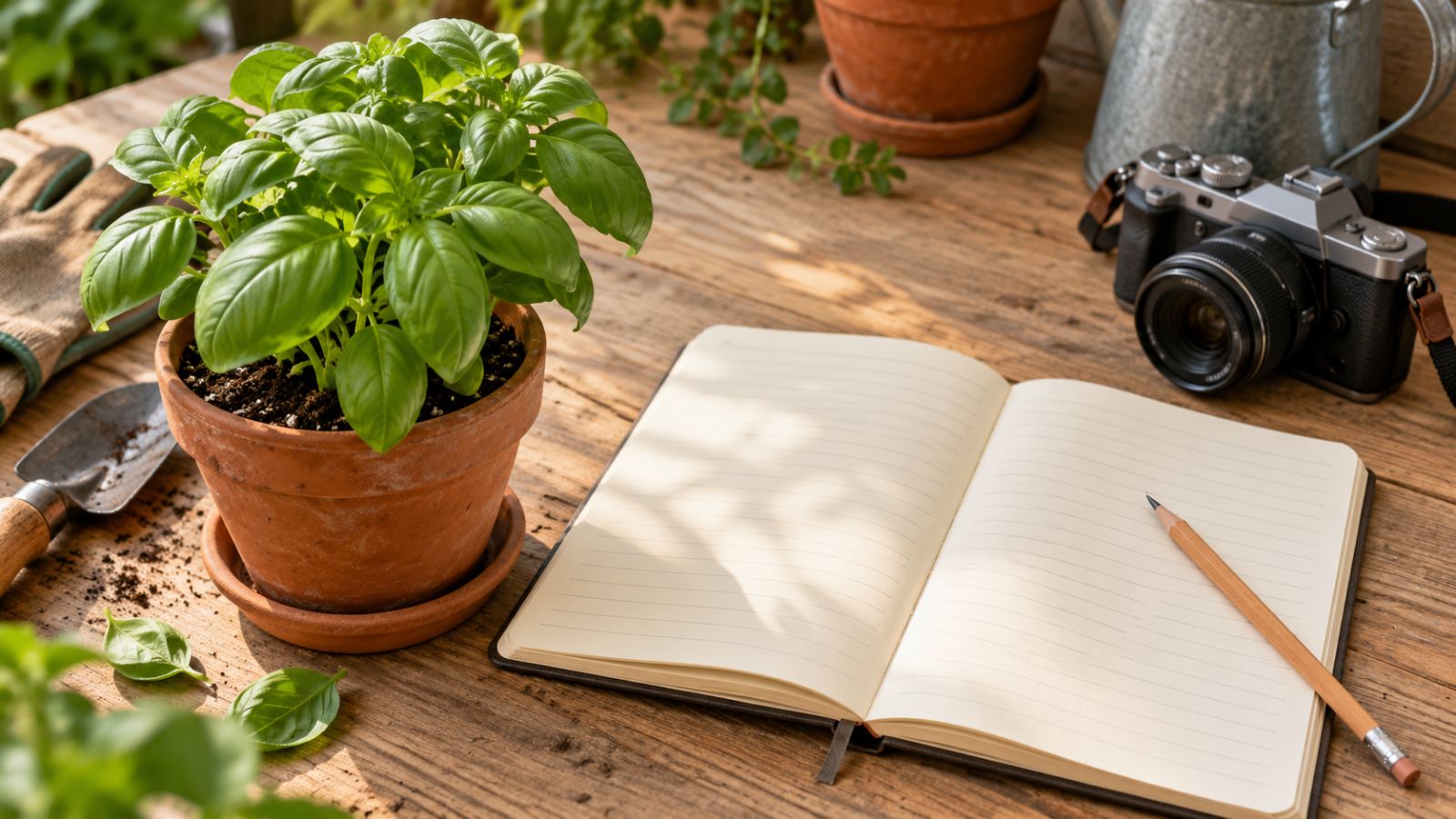
A useful plant record lets you answer ordinary questions: Which variety is this? When did I repot it? Was that leaf already marked last week? It does not need a measurement every morning. Start with enough information to recognize the plant and reconstruct the care choices that matter.
Build one small record before designing a whole system
Choose a notebook, spreadsheet, photo folder, or plant-management app that you can return to easily. Penn State Extension emphasizes choosing a journal that fits your goals and starting at a manageable scale in its garden-journal guide. The record is useful when you can find and understand it later, not when it has the most fields.
Begin with one plant you already check regularly. Use the template below for two or three ordinary care decisions, then remove fields you never use. Add detail only when it helps answer a real question. This is a suggested workflow, not a requirement to collect a complete dataset before caring for a plant.
Give the plant a stable identity
Make one reference entry and update it when the plant moves or its identification changes:
Plant label: a name or identifier that separates this plant from similar ones.
Species and cultivar: copy the nursery label if available; mark an uncertain identification as uncertain.
Start date: when you bought, received, sowed, or propagated it. Use 'unknown' where needed.
Growing place: the garden area or indoor position, with a brief note about conditions.
Container or bed: enough detail to recognize its setup, including the potting mix if known.
For several plants of the same kind, a label such as 'Basil A, kitchen window' is easier to distinguish from 'Basil B, balcony' than two entries both called 'basil.' These are illustrative names, not observations from a PlantPeepal growing trial.
Take a baseline photograph you can compare
Take a whole-plant photo and, when useful, a closer photo of leaves, buds, flowers, or fruit. On later visits, try a similar angle and include enough context to recognize the same part. Keep the date with the image. If you measure height or leaf size, record the units and where the measurement starts.
Changing the angle, cropping, or lighting can make comparisons misleading, so write down the observation that prompted the photo. 'New shoot beside the main stem' is more useful than 'looking better.' A dramatic before-and-after pair should not be treated as proof that a particular treatment worked.
Use a four-part care entry
For each meaningful event, record date, observation, action, and next check. A check that ends in no action is still worth recording when it explains the decision.
Illustrative entry: 12 May, morning. Medium still moist below the surface; leaves look unchanged. No water added. Check again tomorrow and photograph the new shoot at the next weekly review.
Keep facts separate from interpretations. Write 'three lower leaves yellow' as the observation. Put 'possible watering issue' in a separate note, and include what would help confirm or reject it. If a nursery or laboratory identifies a problem, record who made the identification and when. Our leaf-mulch garden observation gives an example: it reports surface-pooling times while separating them from unmeasured changes in soil structure.
Record changes that will matter next season
Note sowing and transplanting dates, potting-medium changes, unusual weather, flowering, and harvests where relevant. Keep enough detail to compare what you planned with what actually happened. The RHS garden-journal advice explains how records of timing, growing conditions, and results can inform later decisions.
A short weekly review can ask: What changed? What care is due? Which question remains unanswered? At the end of a season, choose one thing to repeat, one to investigate, and one to change. For a child or a very small growing project, drawings and a few observations can be enough; the RHS offers a simple garden-diary activity.
Use your records in PlantPeepal
PlantPeepal can keep a plant's photos and care history together. Use the photo timeline for observations and care records for completed work. Treat a reminder as a prompt to inspect, not evidence that watering or feeding is needed. Keep an independent copy of important notes or original photos if you want a separate archive.
Try this record alongside our guides to watering decisions, yellow avocado leaves, and autumn fig leaf fall. Each gives you something specific to observe, rather than a longer list of things to log.
About this guide
This is a research-based editorial guide, prepared with AI-assisted drafting and checked against the linked horticultural references. It does not report an original PlantPeepal growing trial or claim independent expert review.
Sources and further reading
- Research-based editorial guidance. AI-assisted drafting; no original growing trial or independent expert review is claimed.
- https://extension.psu.edu/keeping-a-garden-journal
- https://www.rhs.org.uk/advice/grow-your-own/features/keeping-a-garden-journal
- https://www.rhs.org.uk/education-learning/children-young-people/family-activities/do-it/make-a-garden-diary
- Featured image: AI-generated editorial illustration.